Factors for Choosing the Best Type of Container Transport

Choosing the best type of container transport is not just about moving a container from port to destination.
It is about how the container is delivered, what equipment is used, and whether the delivery site can realistically receive it without delays or rehandling.
One of the most common mistakes in container logistics is selecting the wrong transport type, particularly when deciding between SKEL trailers and sideloaders.
Why Choosing the Right Type of Container Transport Matters
The transport type you choose directly affects delivery success.
Incorrect equipment selection often results in failed deliveries, rebooking fees, double handling, and unnecessary delays. These problems usually appear at the final delivery point, where there is the least flexibility to fix them.
Getting the transport type right upfront reduces cost and risk across the entire move.
Road and Rail Container Transport Options

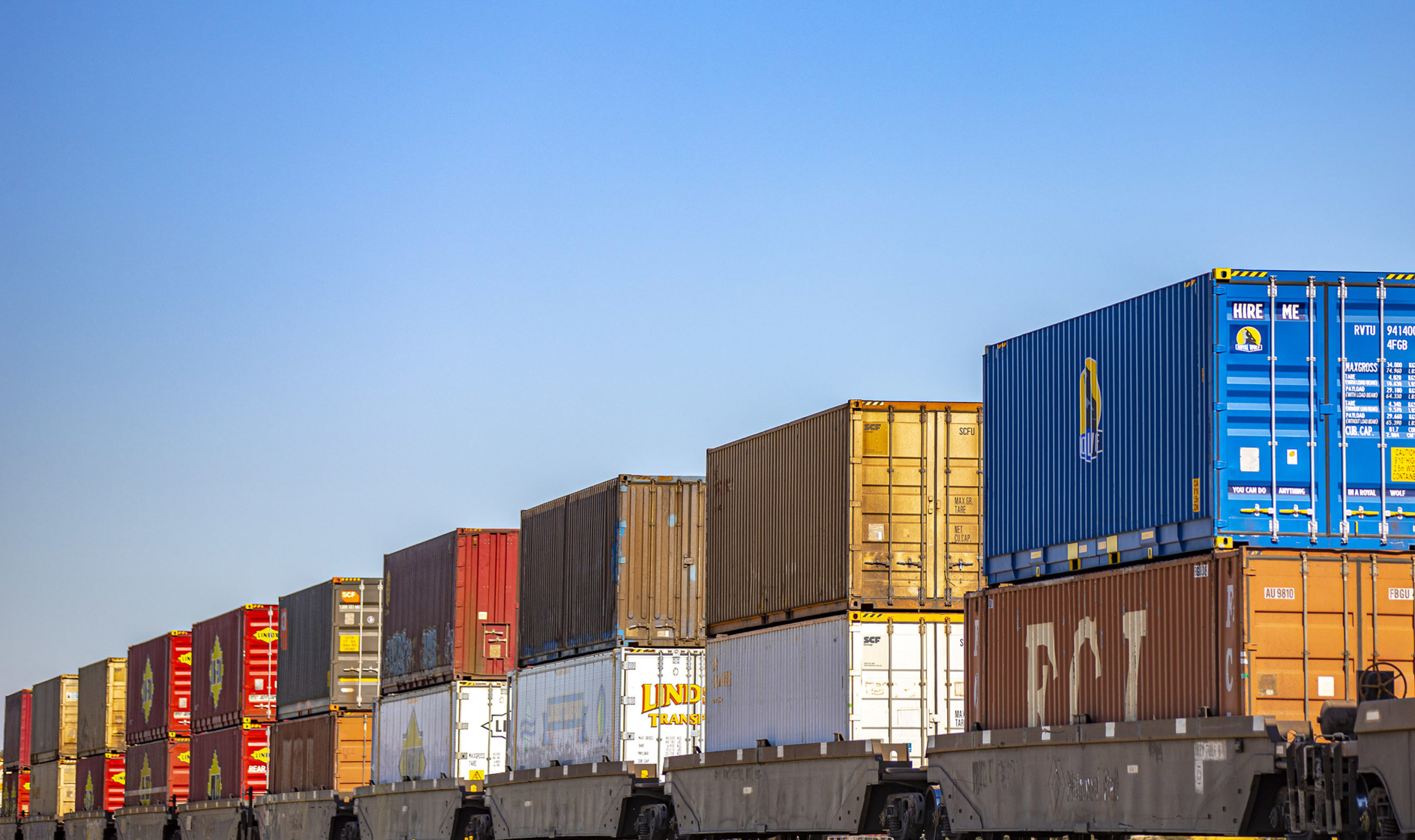
Road and rail are the two main ways containers move domestically.
Road transport offers flexibility and direct access to most metro and regional locations. Rail can be effective for long-distance container movements where infrastructure and schedules align, though it usually requires road transport at both ends.
Regardless of road or rail, the final delivery method determines whether the container can actually be placed on site.
SKEL vs Sideloader Container Transport
This is the most important decision in container delivery.
A SKEL trailer transports the container but does not unload it. A sideloader transports and lifts the container on and off the ground.
Choosing between them depends entirely on delivery site conditions.
When SKEL Transport Is Suitable

SKEL transport works when:
-
The delivery site has a crane or forklift capable of unloading the container
-
The container is being delivered to a depot or warehouse with lifting equipment
-
Space and access are unrestricted
-
Lower transport cost is the priority
SKEL transport is cost-effective, but only when unloading capability already exists.
When Sideloader Transport Is Required
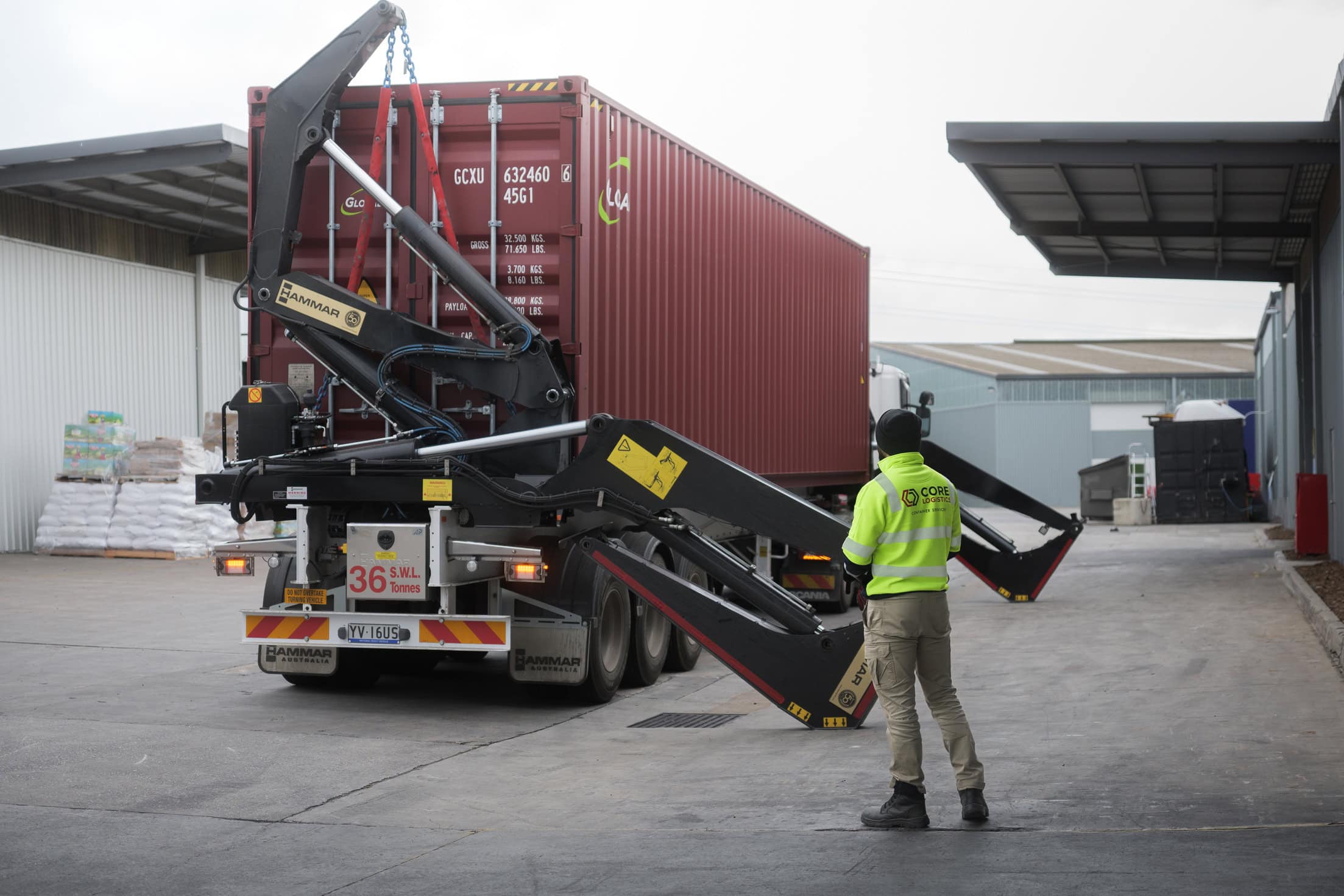
Sideloader transport is required when:
- The site has no lifting equipment
-
Space is limited or access is tight
-
Containers need to be placed directly on the ground
-
Urban delivery conditions apply
While sideloaders cost more upfront, they often prevent failed deliveries, rehandling, and return-to-port scenarios that are far more expensive.
Delivery Site Access and Space Constraints
Access is the deciding factor in most container deliveries.
Narrow streets, overhead obstructions, soft or uneven ground, and limited turning space can all rule out certain transport types.
Assessing site conditions properly before booking transport avoids last-minute equipment changes and delivery failures.
Cost Factors Beyond the Transport Rate
The lowest quoted rate is rarely the cheapest outcome.
Additional costs may include:
-
Failed delivery charges
-
Rebooking and redelivery fees
-
Storage or demurrage
-
Idle labour and equipment time
Choosing the correct transport type upfront reduces total landed cost, even if the base rate appears higher.
Reliability, Risk, and Failed Deliveries
Failed container deliveries are almost always caused by mismatched equipment and site conditions.
Reliable container transport comes from experience, planning, and correct equipment selection, not rushing bookings or assuming sites are suitable.
Making the Right Container Transport Choice
The right container transport choice balances:
-
Equipment availability
-
Cost versus risk
-
Time sensitivity
This decision should be made before the container is collected, not when the truck arrives.
Final Thought
Choosing the best type of container transport goes beyond road or rail.
The real decision is how the container is delivered at the final destination and whether SKEL or sideloader transport is used.
At Core Logistics, container transport is planned with a focus on access assessment, correct equipment selection, and reliable execution across Melbourne and surrounding regions.
When the right transport type is chosen, containers arrive once, on time, and without surprises.